IT Service Management
Major IT Incident Response & Recovery Orchestration
Coordinates monitoring, ITSM, communications, SMEs and remediation agents from detection through postmortem.
View ApplicationIT Service Management · App Design
Correlates monitoring alerts, incidents, changes and infrastructure data; proposes likely root cause and remediation.
Built for: CIO/CTO
End-to-end workflow
Stages retain the source reference workflow. Actor assignments and approval controls are not inferred; deployment responsibilities require review with your process owners.
Spike in tickets + application alerts + recent deployment
agent correlates events
identifies release as likely cause
recommends rollback
Data sources used in the reference workflow. Integration approach, authentication and permitted actions are assessed for each deployment.
Measures to baseline before a pilot and track afterwards. Fynite does not publish projected results for this application.
Deployment-planning guidance, not a verified configuration for this application. Specific controls require confirmation during evaluation.
Questions
Correlates monitoring alerts, incidents, changes and infrastructure data; proposes likely root cause and remediation. In the reference scenario: Spike in tickets + application alerts + recent deployment → agent correlates events → identifies release as likely cause → recommends rollback.
Have another question? Use the assistant in the corner of this page — it knows this application's details.
Related applications
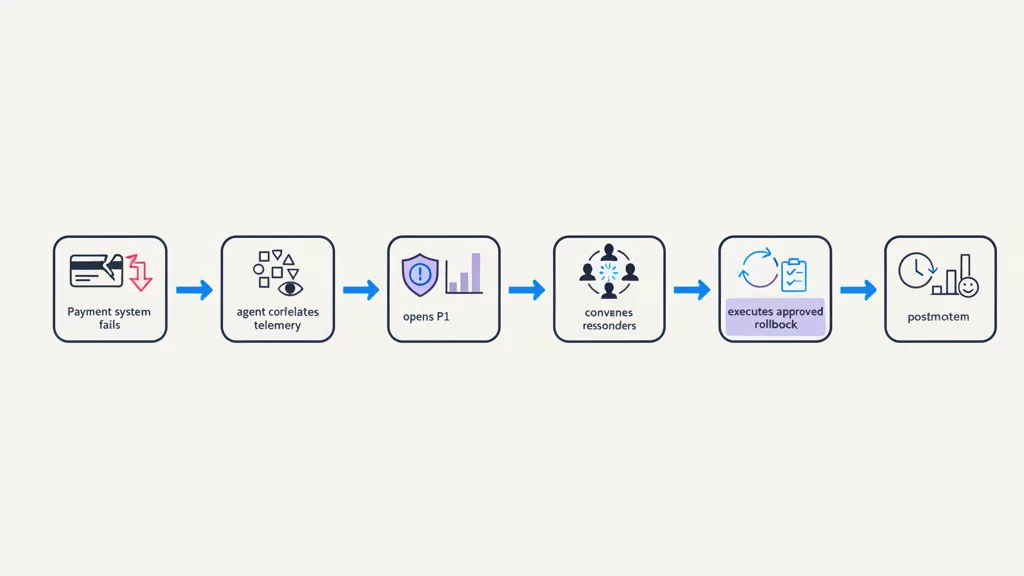
IT Service Management
Coordinates monitoring, ITSM, communications, SMEs and remediation agents from detection through postmortem.
View Application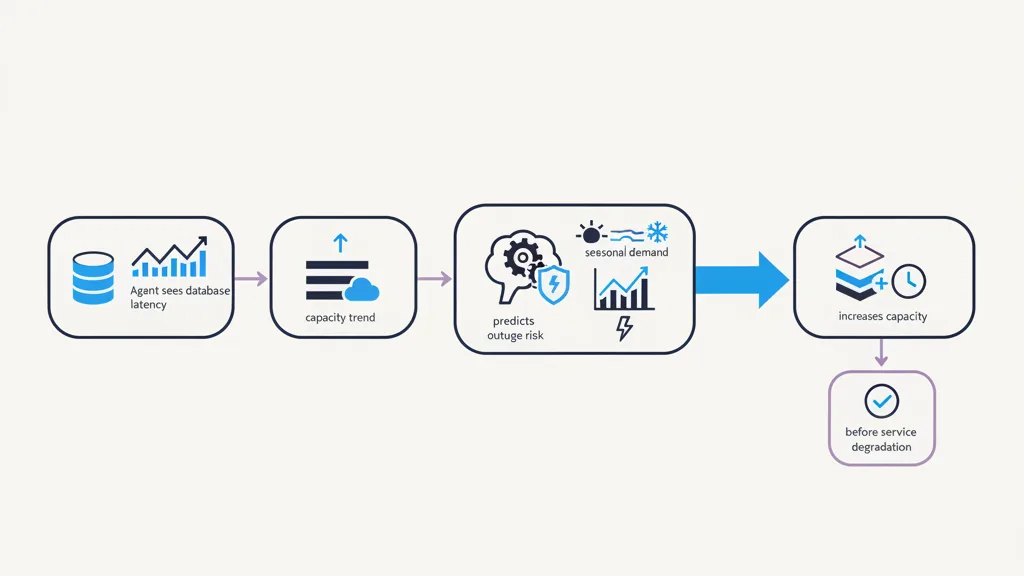
IT Service Management
Learns from telemetry, incidents, capacity and changes to identify likely failures and trigger preventative remediation.
View Application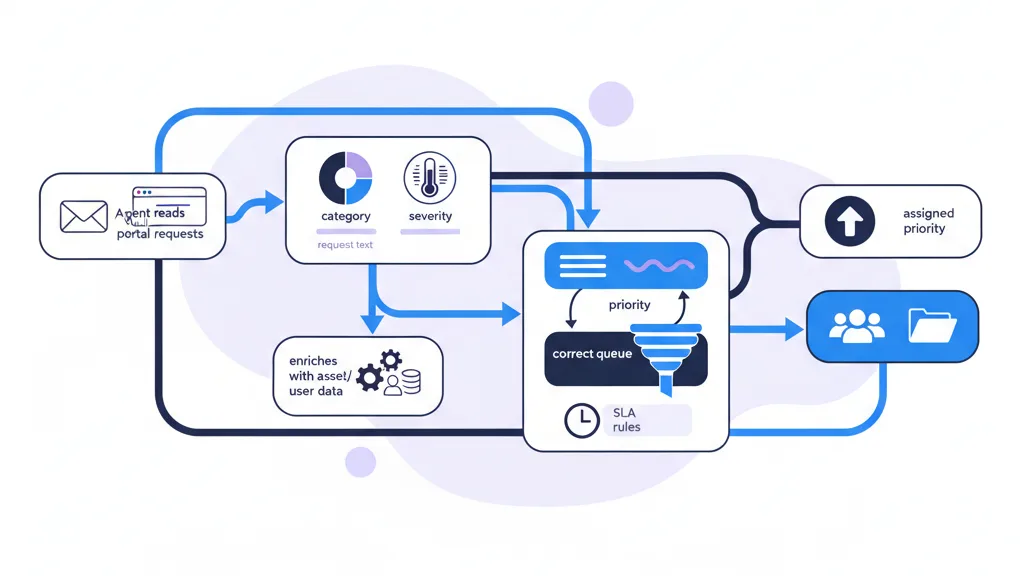
IT Service Management
Classifies, prioritizes and routes tickets using request text, user context and SLA rules.
View ApplicationIllustrative evaluation context, not a revised source workflow or verified deployment specification.
Related illustrative examples—not proof that this design implements the workflow or has validated connectors.
Conflicting asset feeds obscure identity, IT/OT classification and service dependencies—making risk prioritization and CMDB changes harder to trust.
Explore This Agent Workflow : OT/IT Asset IntelligenceStart with the outcome
Start from an existing enterprise application or bring your own requirements. See how Fynite can connect your systems, deploy reasoning agents, and turn complex work into governed execution.